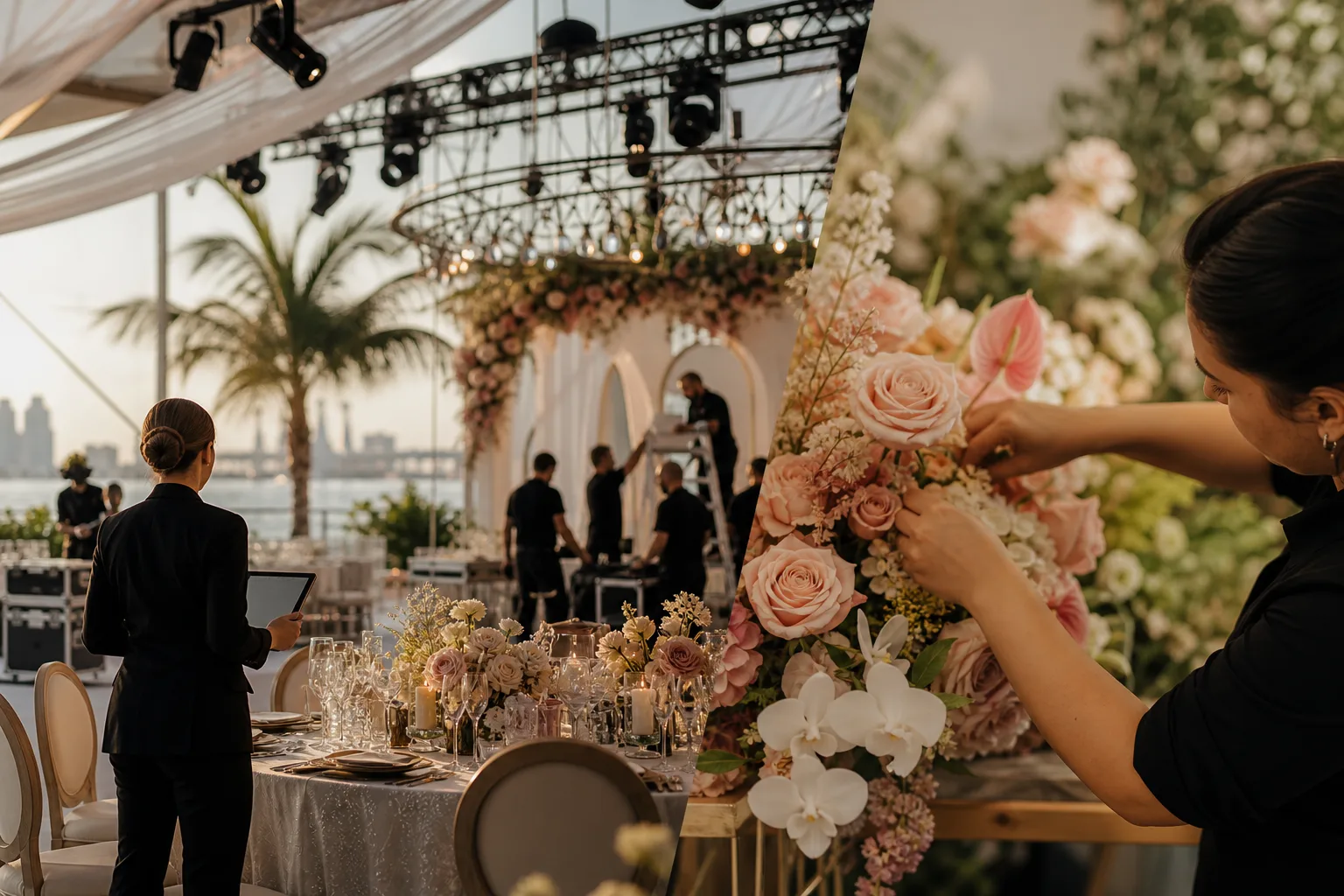
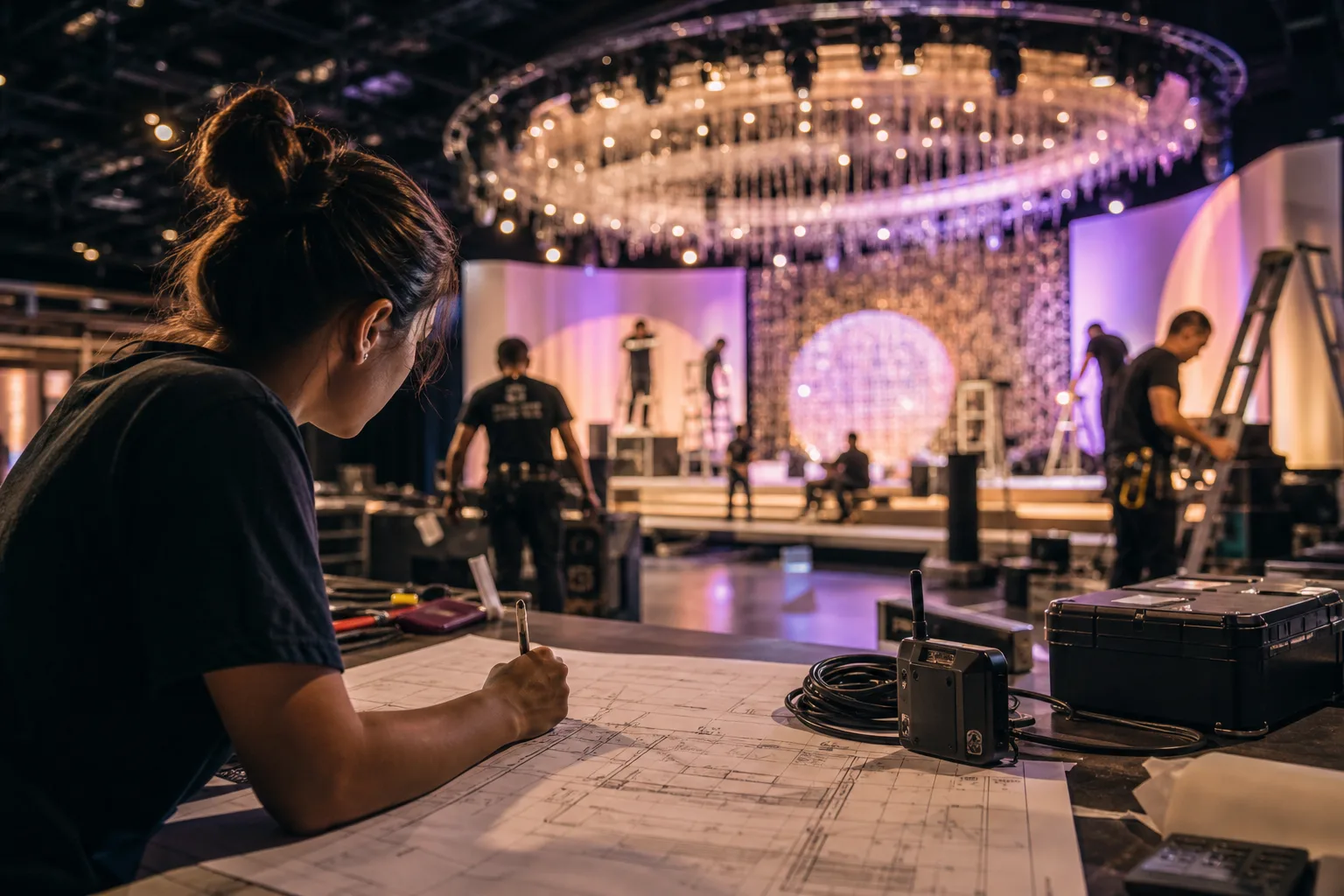
Your venue is booked, but the final weeks are filling fast. Approvals are still pending, vendor decisions keep moving, fabrication needs a firm release date, and installation is competing with catering, staffing, and guest communications. An event production timeline gives those pressures an order before the event starts to compress.
Most event hosts don't have a calendar problem; they have a coordination problem. The timeline turns the date into a finish line, then connects the creative, technical, logistical, and operational work that must reach it together. A clear design brief gives that shared roadmap a stronger starting point, and this guide to what a design brief includes for an event fits the same workflow.
When Prim Miami plans weddings, brand experiences, corporate events, and private celebrations, its end-to-end perspective follows the work from first sketch to last light. The result is a usable timeline that begins with the brief, moves through procurement, fabrication, load-in, installation, rehearsal, event-day execution, and strike.
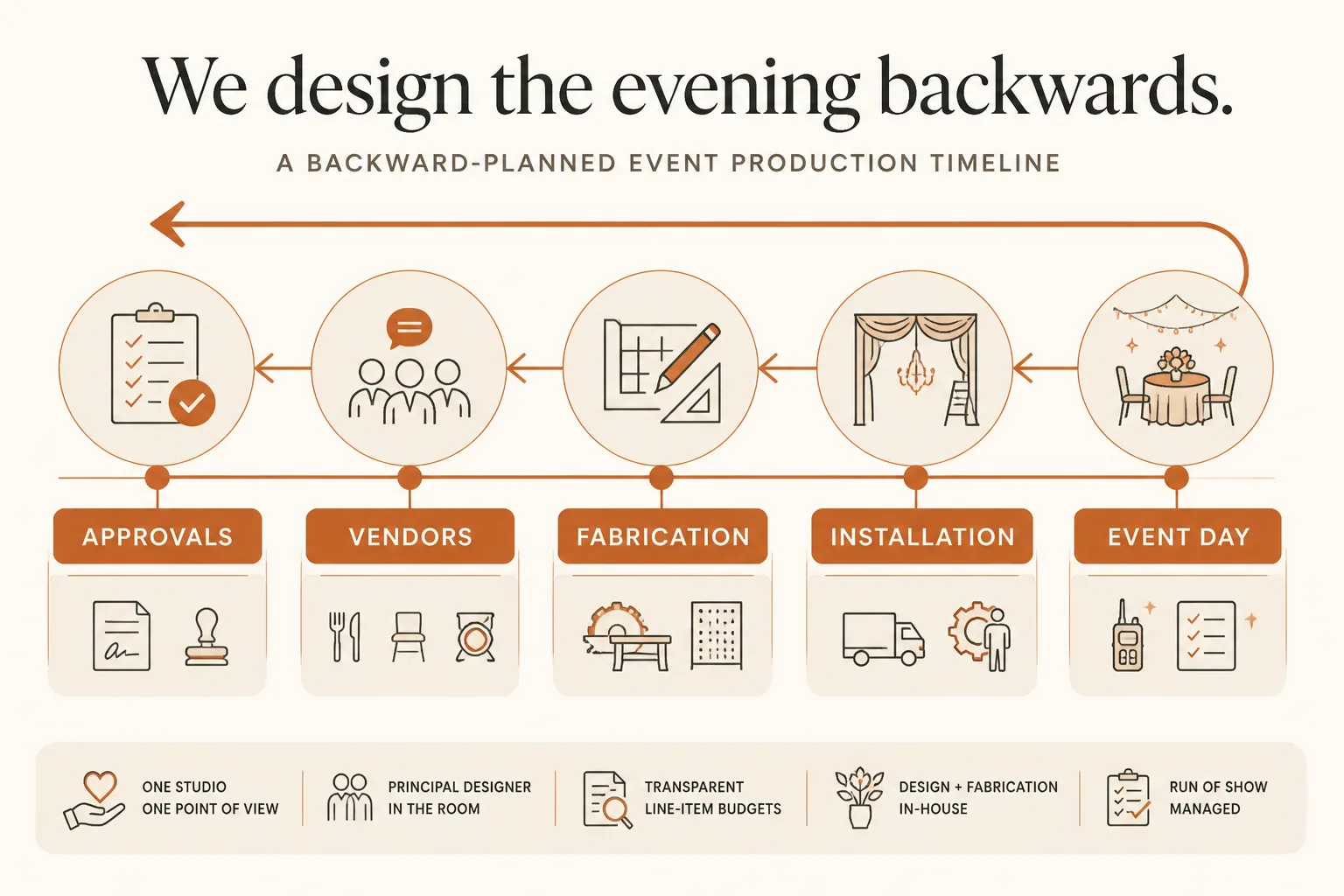
Build the Timeline Backward From Doors Open
Your event date is fixed, but doors open is the operational deadline that controls every earlier decision. Creative approvals, vendor confirmations, fabrication, load-in, installation, rehearsal, and staffing all need to reach that moment in the right order.
Use 6 to 12 months as a planning guardrail for large-scale events and approximately 8 to 12 weeks for smaller gatherings. These ranges aren't promises. They help protect time for revisions, shipping issues, venue restrictions, and production fixes. A complete roadmap also connects catering, marketing, logistics, staffing, and contingency planning.
The timeline works when every milestone says what is due, who owns it, what it depends on, and when the decision becomes final. Prim Miami applies that rule across weddings, brand experiences, corporate events, and private celebrations, from first sketch to last light.
Use the Event Date as the Final Fixed Point
Start with doors open, not the first design meeting. Count backward from guest arrival to rehearsal, installation, load-in, fabrication delivery, vendor confirmation, procurement, and creative approval. If your reception opens at 6:00 p.m., the schedule must show when the room is complete, when technical checks finish, and when guests can enter safely.
Your venue access window may be the real constraint. A ballroom that allows load-in at 8:00 a.m. gives you a different plan from a private estate with a narrow delivery window. For an outdoor brand activation, weather protection and power checks may need to be complete before the scenic build begins.
Separate Creative Decisions From Production Deadlines
Creative approval starts the production chain, but it doesn't finish it. A mood board approval must release specific purchases, a floral recipe, a fabrication drawing, or a lighting plot. Show that handoff rather than treating "design approved" as a complete task.
Weak version: "Approve floral design before the event."
Strong version: "Approve the 24-foot orchid installation, vessel count, color palette, and final placement by May 12 so procurement can release materials by May 15."
A guide to what a contingency budget is for events fits this workflow because your reserve also needs an owner, a trigger, and a decision date.
Give Every Milestone an Owner and a Decision Date
Prim Miami's practical rule is simple: every line item needs an owner, a dependency, and a decision date. You might assign the planner to venue access, the lighting vendor to the technical plot, the floral team to recipe approval, and the production lead to final room readiness.
Practical rule: If a deadline has no owner, dependency, and decision date, it isn't scheduled yet.
- Venue access: You have written load-in, setup, rehearsal, guest entry, and strike windows.
- Vendor confirmation: You have signed scopes, deposits, arrival times, and contact details for every key vendor.
- Technical requirements: You have approved power, rigging, sound, lighting, staging, and internet requirements.
- Staffing: You have named leads for production, vendors, guest flow, safety, and event-day decisions.
- Contingency planning: You have documented weather, shipping, access, power, and replacement plans.
- Rehearsal: You have reserved time to test cues, speeches, transitions, lighting, sound, and the completed room.
When the final week carries every unresolved decision, there's no room left for responsible revisions or repairs. The timeline needs to expose those gaps while your team can still act.
Create the Seven-Stage Event Production Backbone
Each handoff needs a clear owner and a completion test. That gives a wedding, brand activation, corporate conference, or private celebration one production roadmap.
Production sequencing differs from broad event-planning advice. The work moves from creative brief to strike, so the team knows what must be approved, built, tested, and protected.
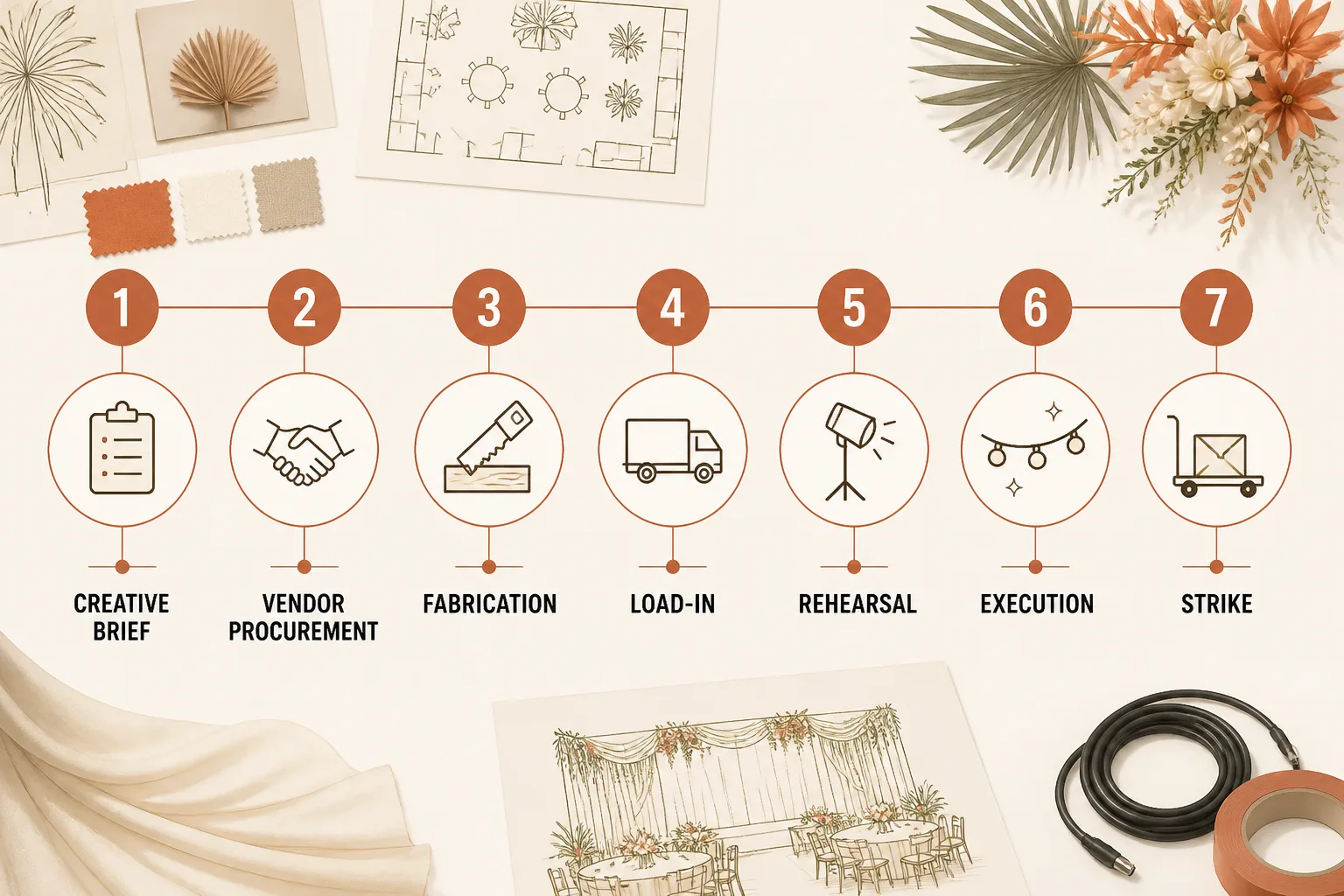
The Best Way to Create an Event Timeline
Start with the guest-facing deadline, then place each production handoff before it. Record owners, dependencies, approval dates, and failure points.
1. Lock the Creative Brief and Production Constraints
Define the audience, feeling, budget, venue limits, guest count, access, power, rigging, and event purpose. Done means an approved brief. A wedding includes ceremony and reception details; an activation includes branded touchpoints.
Weak: "Make the ballroom feel luxurious."
Strong: "Create a candlelit coral-and-ivory reception for 180 guests, with a 24-foot stage and branded welcome moment."
- Approval: You have one signed creative brief.
- Constraints: You have documented venue, budget, access, and safety limits.
2. Procure the Venue, Vendors, and Technical Partners
Confirm venue conditions and contract florists, rental partners, fabricators, lighting, audio, staging, and content teams. Done means every partner understands scope, deadlines, insurance, and payment terms.
The 7 Stages of Event Planning
The seven stages are creative brief, procurement, design development, fabrication and content, logistics, installation and rehearsal, then execution and strike.
3. Approve Design, Floral, Lighting, and Fabrication Details
Approve drawings, layouts, palettes, floral plans, lighting positions, scenic details, and content direction. Prim Miami connects creative direction, floral installations, set design, and lighting, though an in-house team may still need separate technical vendors.
4. Release Fabrication, Print, Content, and Rental Orders
Release only approved files and specifications. Done means assets are finished or production-ready. Delayed approvals here cause substitutions, rush fees, and visible compromises.
5. Confirm Logistics, Staffing, Permits, and Load-In Windows
Create a workable load-in plan covering trucks, dock access, labor, permits, storage, credentials, weather, and strike timing. Corporate events require show-flow staffing; destination events require shipping and local backup plans.
6. Install, Test, and Rehearse Every Guest-Facing Moment
Complete the room, then test power, lighting, audio, screens, floral stability, signage, speeches, transitions, and cues. Done means a tested environment and approved run of show.
Ten Steps to Plan an Event
You can expand this backbone into ten working steps by separating approvals, contracting, design, production, logistics, testing, execution, and closeout according to your event's complexity.
7. Execute the Event, Manage Changes, and Strike Cleanly
Run the event from one decision point, document changes, protect the guest experience, and supervise strike. Done means a controlled event, returned venue, reconciled rentals, and documented closeout.
Catch the Production Failures Before Event Week
A polished concept can still fail when the production timeline skips the conditions behind it. You may approve a floral installation, custom stage, lighting look, or branded environment before anyone checks the loading dock, ceiling height, power, rigging rules, or destination shipping route.
These failures aren't creative problems alone. They're decision-gate problems. Each approval should include its production requirements to protect design quality, budget control, and the guest experience.
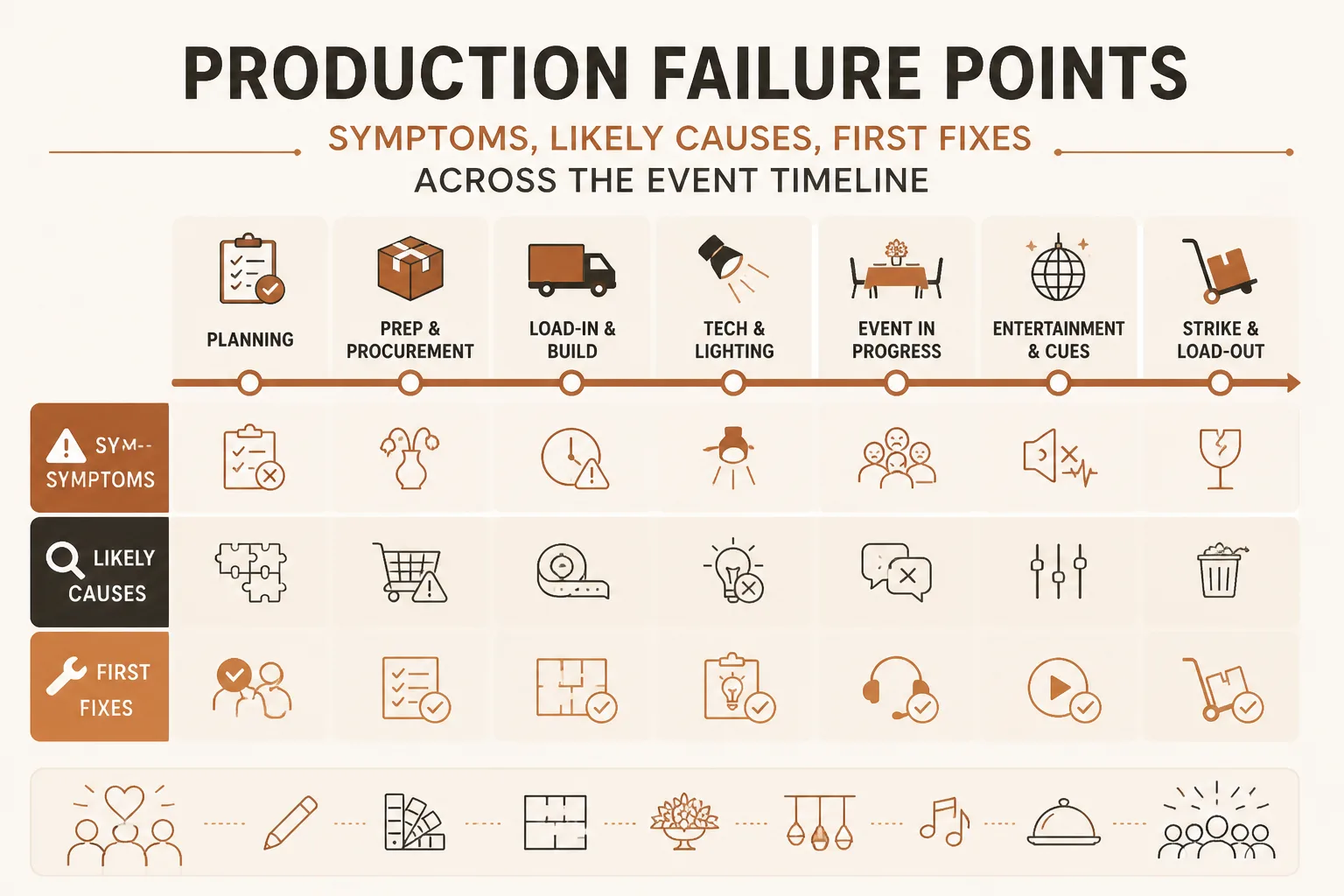
When the Design Is Approved but Cannot Fit Through the Venue
You may approve a 12-foot floral arch, then discover that the service elevator is 8 feet high or the venue permits only a narrow load-in window. Prim Miami can coordinate floral, set, and lighting details, but venue restrictions still require verification at the site.
When Vendors Are Booked but No One Owns the Handoff
Your lighting vendor may need dedicated power, rigging approval, content files, or an earlier crew call. Your destination team may also need shipping documents and local labor. Confirm those dependencies before contracting, then assign one owner to each handoff.
When Fabrication Finishes Too Late for Testing
Fabrication isn't one date. Your custom set piece needs design release, build, quality control, packing, and delivery gates. A branded scenic wall that arrives untested leaves no time to correct graphics, hardware, or finish quality before guests arrive.
When Installation and Rehearsal Share the Same Time Block
Your installation schedule needs protected rehearsal time. A schedule that says "load-in, install, rehearse" from 2:00 to 4:00 p.m. leaves no real testing window.
Weak schedule: "Load-in: 2:00 to 4:00 p.m.; rehearsal: 4:00 to 4:30 p.m."
Protected schedule: "Load-in: 10:00 a.m. to 1:00 p.m.; install: 1:00 to 4:00 p.m.; rehearsal and cue test: 4:00 to 5:30 p.m."
| symptom | likely cause | first fix |
|---|---|---|
| An approved visual cannot be installed as designed | Venue access, dimensions, rules, or load-in conditions were not checked before approval | Verify the venue survey, access window, rigging limits, power, dimensions, and installation restrictions |
| A booked vendor cannot deliver the planned production element | Technical dependencies were not confirmed before contracting | Create a dependency check covering power, rigging, connectivity, staffing, timing, and site requirements |
| Fabrication is still unresolved near event week | Fabrication was treated as one deadline instead of design release, build, review, revision, and delivery milestones | Break fabrication into approval, production, quality-control, packing, and delivery gates |
| Installation finishes without enough time to test the event | The schedule omitted protected rehearsal time | Reserve rehearsal after installation for run-of-show, lighting, content, cues, and guest-flow testing |
Answer the Naming, Framework, and Budget Questions
You may see several names for the same planning document, but the useful one is the document that helps you make decisions. For a wedding, brand experience, corporate event, or private celebration, the right framework clarifies ownership, approvals, dependencies, and handoffs. Prim Miami applies that scope-based view across South Florida, the Caribbean, and Mexico, although the venue, guest experience, and production requirements still determine the final plan.
The 5 C's of an Event
The 5 C's commonly refer to concept, coordination, communication, control, and closeout. Use them to test whether the event has a clear idea, assigned responsibilities, reliable updates, managed changes, and a documented finish. They're a useful discussion framework, not a replacement for the production schedule that controls vendors, approvals, fabrication, and event-day handoffs.
How Much to Pay an Event Planner
Pay according to scope, not a made-up universal planner fee. Your cost depends on guest count, design services, production management, location, complexity, vendor coordination, and travel. A Miami wedding with floral installations needs a different scope from a destination celebration or brand activation. Prim Miami builds proposals around those requirements. This event cost breakdown for luxury events fits the same budgeting workflow.
What an Event Timeline Is Called
An event timeline is often called a production schedule, event roadmap, project timeline, or run-of-show plan. Use any of these labels if the document shows operational dependencies, owners, approvals, and handoffs. A calendar that only lists tasks by date helps with reminders, but a production schedule must also show what has to happen before the next decision can move.
A Better Word for Timeline
A production schedule is usually a better term than timeline when you need execution control. You may also call it an event roadmap when it covers the full project, or a run-of-show when it focuses on event-day cues. The name matters less than whether you can use the document to approve designs, release fabrication, confirm vendors, and protect rehearsal time.
The 5 Stages of Event Management
The 5 common stages are research, design, planning, execution, and evaluation. Use this structure to frame a project from the first brief through post-event review. It's broad, though. A project-specific production plan must add vendor procurement, fabrication, load-in, installation, rehearsal, guest flow, and event-day responsibilities where those details affect the outcome.
The 7 P's of Event Management
The 7 P's are commonly presented as product, price, place, promotion, people, process, and physical evidence. Use them to examine the offer, budget, venue, audience messaging, staffing, operating method, and visible guest experience. They help shape strategy, but the event production schedule still has to assign dates, owners, approvals, dependencies, and handoffs.
Turn the Plan Into Your First Event Production Brief
You don't need another sprawling spreadsheet to begin. You need one page that gives your team a shared understanding of the guest-facing outcome, deadlines, owners, and limits. Large-scale events may require 6 to 12 months of planning, while smaller gatherings often fit within 8 to 12 weeks.
Start before you open a calendar or request vendor quotes. The brief should connect creative direction with floral, set, lighting, staffing, logistics, contingency planning, and event-day execution.
-
1. Write the Event Outcome and Non-Negotiables
Define the result: Write what you want guests to feel, understand, or do, then list fixed requirements such as guest count, ceremony timing, brand message, accessibility, or entertainment.
-
2. Mark the Fixed Venue and Production Deadlines
Anchor the date: Record doors open, load-in, rehearsal, strike, venue access, and permit deadlines. Work backward from doors open, not forward from the event date.
-
3. Assign Owners to Every Dependency
Name one owner: Give each decision to one person, from floral approval and lighting focus to catering access, transportation, staffing, and guest communications.
-
4. Schedule Approvals Before Procurement and Fabrication
Protect the release point: Set decision gates for concept, budget, floor plan, finishes, technical drawings, and final quantities before you authorize purchasing or fabrication.
-
5. Start With the Creative Brief and Constraints Page
Build the control document: Complete this page before you create the detailed calendar. It gives you a clean basis for quotes, handoffs, and production decisions.
- Purpose: Your event's business, celebration, or guest objective is stated in one sentence.
- Experience: Your audience, atmosphere, design priorities, and key moments are clear.
- Conditions: Your venue rules, access limits, guest count, technical needs, and known deadlines are recorded.
- Budget: Your working range, approval authority, contingency, and purchasing limits are visible.
If you want a faster way to do this, Prim Miami connects creative direction, floral installations, set and lighting design, vendor coordination, and destination production for weddings, brand experiences, corporate events, and private celebrations. Explore event production ideas and planning guidance, while venue and permit approvals remain with your local authorities.

Planning something like this?
Tell us the date and we'll tell you if we're free.