The head table is a holdover. It made sense when a wedding was a receiving line with dinner attached — the couple elevated, the room facing forward, the evening running on announcements. Almost nothing about a contemporary Miami event works that way, and yet the floor plan keeps arriving with a long rectangle pinned to the north wall.
Our objection is not aesthetic. It is structural. A head table forces every other table into a fan around it, which means a third of your guests spend the evening with their backs to the people they came to see. It creates a front of the room, and a front implies a back — and the back is where energy goes to die.
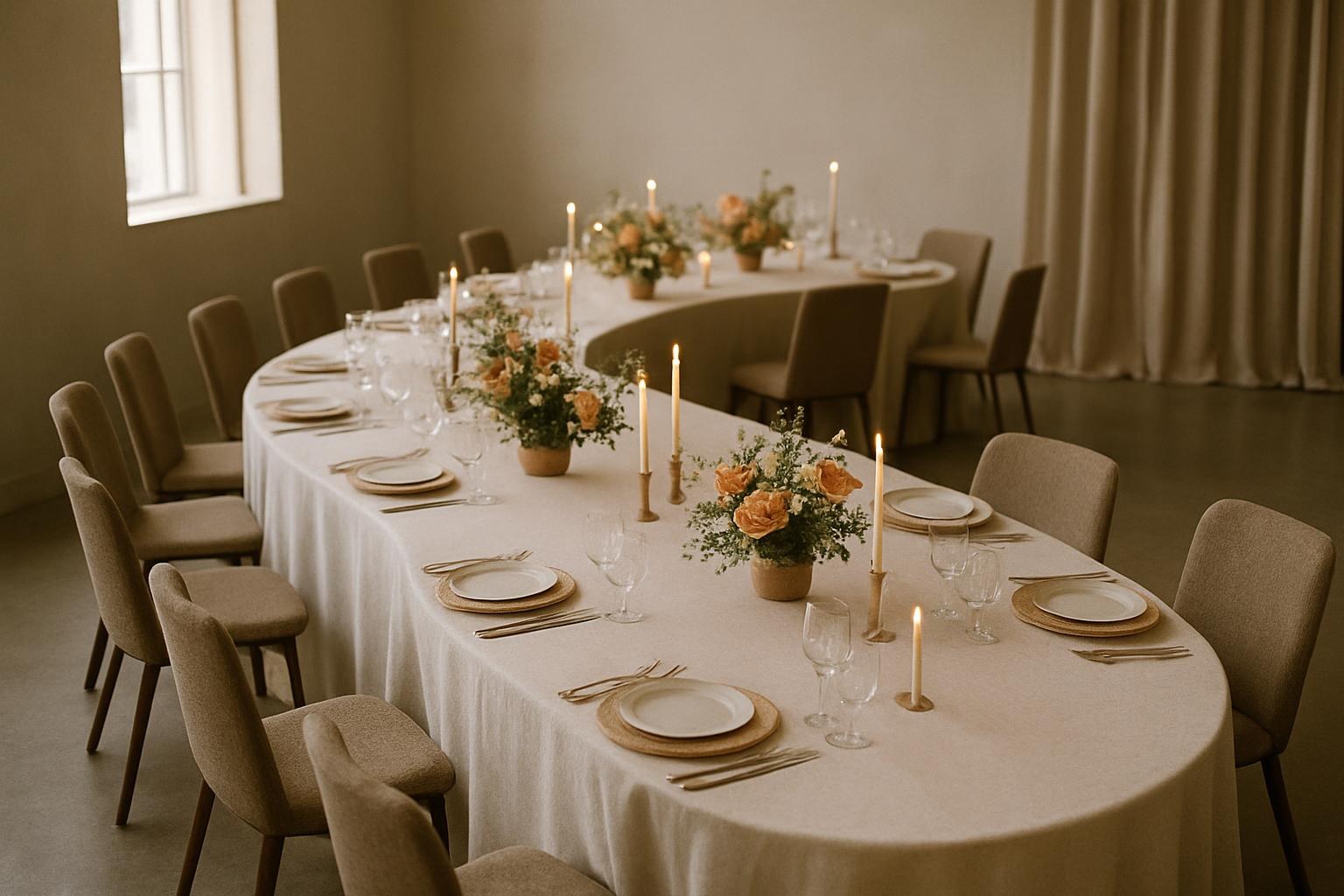
The alternative we return to most often is a serpentine run: two or three curved tables threading through the room rather than facing it. Guests sit on both sides. Sightlines cross instead of converging. Nobody is seated behind anybody. The curve also solves a practical problem — it breaks the visual monotony of round tables without requiring a single extra dollar of decor.
A room feels intimate when every guest can see a face they love without standing up.
Where a couple wants to be seen, we seat them centrally rather than frontally, usually at the inner bend of the curve. The effect is the opposite of a stage: they are surrounded rather than displayed, and guests approach all evening instead of queuing at a designated moment.
Two constraints to plan around. Serpentine tables need a wider aisle for service — allow 60 inches rather than the usual 48 — and they consume roughly 15% more floor than the equivalent rounds. In a tight venue that trade is real, and sometimes the rounds win. But when the room allows it, a curved plan does more for intimacy than any centrepiece we could build.

Planning something like this?
Tell us the date and we'll tell you if we're free.